Data Pitfalls Detector
Check data work, whether done by humans or AI, for common pitfalls before you ship it. Paste a written analysis, drop in analysis code, or upload chart images, and get specific, actionable findings.
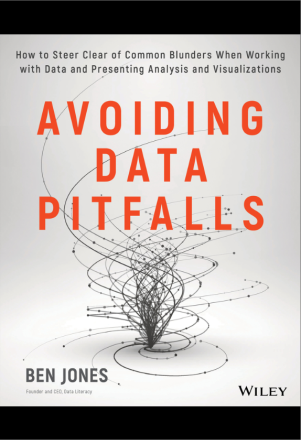
Powered by datapitfalls, the open-source detector based on Ben Jones’s Avoiding Data Pitfalls. It checks against a 75-rule taxonomy spanning eight pitfall domains.

Created by Ben Jones, author of Avoiding Data Pitfalls.
Hover or tap a domain to see what it covers.
Drag & drop chart images here
or paste from your clipboard, or
PNG, JPEG, GIF, or WebP · up to 4 images · 3 MB each
Your input is sent to Anthropic’s Claude API to perform the analysis and is not stored by this site. Findings are AI-generated guidance — use your own judgment and verify against your underlying data.
Prefer to run it yourself?
The detector is open source and runs from your terminal — scan charts, code, and documents with no limits.
$ npx datapitfalls scan ./your-chart.pngOr install it globally: npm install -g datapitfalls
Found this useful, or spotted a problem?
This tool calls the Claude API on every scan. Donations help offset token costs and keep it free to use — thank you.

Want to use this with your organization?
If this is useful for your own work, it can do more for your whole team. We help organizations build pitfall-checking into their workflow — and the data literacy to back it up. Let's talk about what that looks like for you.
Talk to us